
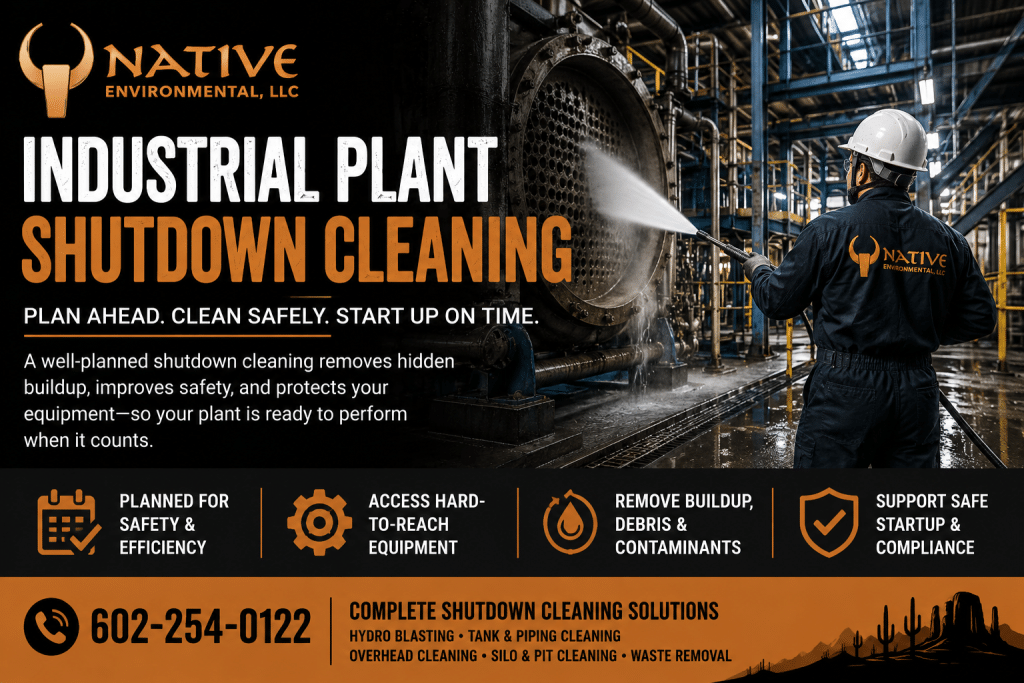
How To Plan Industrial Plant Cleaning During A Shutdown
A planned plant shutdown creates a rare opening. Equipment that normally runs around the clock can be accessed, production areas can be isolated, and cleaning work that would disrupt operations can finally move forward. The opportunity is valuable, but the schedule is usually unforgiving.
Industrial plant shutdown cleaning works best when it is planned as part of the outage rather than added after maintenance crews are already on site. A clear scope, safe access, coordinated sequencing, and realistic completion checks can prevent cleaning from becoming the task that delays startup.
Define The Cleaning Scope Early
Begin with the areas that cannot be reached safely during normal production. That may include process equipment, tanks, pits, silos, conveyors, overhead structures, exhaust systems, heat exchangers, pipework, and spaces behind fixed machinery.
Walk the site with operations, maintenance, safety personnel, and the cleaning contractor. Photographs and marked drawings help prevent vague instructions such as clean the production area. Identify the material being removed, the expected volume, difficult access points, and any surfaces that must be protected.
The scope should distinguish routine dirt from hazardous residue, lead dust, silica, mold, chemical contamination, or combustible dust. Each may require different controls, equipment, packaging, and disposal.
Coordinate Energy Isolation And Access
Cleaning machinery can expose workers to moving parts, pressure, electricity, heat, gravity, and stored energy. The facility must control those hazards through its established energy control procedures before work begins.
Outside contractors and the site team should exchange information about lockout and tagout responsibilities. Nobody should assume that equipment is safe because production has stopped. Valves, conveyors, augers, pumps, and other components may retain energy or be restarted during testing.
Confined spaces require separate planning. Tanks, pits, vessels, and silos may need permits, atmospheric testing, ventilation, attendants, communications, and rescue provisions. Access equipment for elevated work should also be reserved before the shutdown starts.
Put Cleaning In The Right Sequence
The order of work can make or break the schedule. Heavy maintenance performed after detailed cleaning may cover the same area with debris again. Cleaning too late can leave no time for inspection or correction.
A practical sequence usually starts with gross material removal, followed by equipment or maintenance work, then detailed cleaning and final verification. Actual sequencing will depend on the plant and the materials involved.
Different contractors may compete for the same access routes, lifts, waste containers, water supply, or electrical service. A daily coordination meeting helps resolve those conflicts before crews lose hours waiting.
Plan For Water, Waste, And Recovery
Hydro blasting, industrial vacuuming, coating removal, and equipment washing can generate water, sludge, debris, and contaminated material. Decide in advance how each waste stream will be collected, characterized, stored, transported, and documented.
Drain locations deserve particular attention. Wash water should not be allowed to enter a process drain or storm system without an approved plan. Recovery equipment, hoses, containers, and staging areas should be included in the site layout.
Facilities should also confirm where cleaned equipment will dry and how moisture sensitive systems will be protected before startup.
Inspect Before The Plant Restarts
Completion should be measured against the agreed scope, not by whether the crew has reached the end of its shift. Inspect equipment surfaces, overhead areas, access platforms, floors, and spaces where debris can collect.
Remove tools, temporary barriers, hoses, and waste containers. Confirm that guards and components disturbed during work have been restored by the responsible team. Any testing that requires temporary energization should follow the facility procedure.
A final walk with operations, maintenance, safety staff, and the contractor gives the plant one chance to correct missed work before production resumes.
Schedule Plant Shutdown Cleaning In Arizona
Native Environmental provides industrial plant cleaning, hydro blasting, silo and pit cleaning, coating removal, overhead cleaning, contaminated material removal, and other specialized services throughout Arizona and New Mexico. Call 602-254-0122 during shutdown planning so staffing, equipment, access, waste handling, and sequencing can be organized before the outage clock begins.
Live References
Native Environmental: Industrial Plant Cleaning Services
https://nativeaz.com/industrial-plant-cleaning-services.htm
Occupational Safety and Health Administration: Control Of Hazardous Energy
https://www.osha.gov/laws-regs/regulations/standardnumber/1910/1910.147
Occupational Safety and Health Administration: Permit Required Confined Spaces
https://www.osha.gov/laws-regs/regulations/standardnumber/1910/1910.146
Occupational Safety and Health Administration: Hazard Identification And Assessment
https://www.osha.gov/safety-management/hazard-identification