Combustible Dust Cleaning: What Arizona Facility Managers Need To Know
Dust is easy to overlook when it settles high above the production floor. It may collect on rafters, structural steel, ductwork, light fixtures, pipes, cable trays, and equipment that employees rarely inspect. In some industrial settings, however, fine dust is more than a housekeeping issue. Certain materials can burn rapidly when particles become suspended in the air and meet an ignition source.
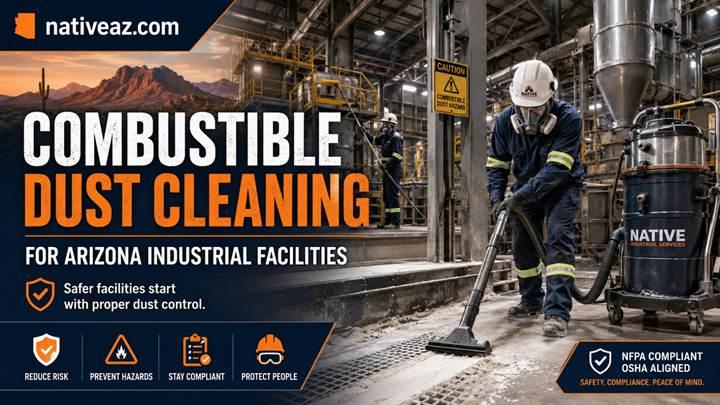
Professional combustible dust cleaning helps facilities remove accumulations from difficult areas while reducing the chance that careless cleaning methods will spread particles through the building. For Arizona facility managers, a planned approach can also support safer operations, cleaner equipment, and better preparation for inspections or scheduled shutdowns.
Which Materials Can Create Combustible Dust?
Combustible dust can come from materials that may not appear dangerous in their normal form. Processing, cutting, grinding, sanding, conveying, or handling a product can create fine particles with different properties from the original material.
Facilities that work with food ingredients, grain, sugar, flour, wood, paper, plastics, rubber, chemicals, pharmaceuticals, textiles, and some metals may produce dust that requires careful evaluation. The specific risk depends on the material, particle size, concentration, work process, ventilation, and possible ignition sources.
A facility should not assume that ordinary looking dust is harmless. Safety data sheets, process knowledge, testing, and a formal dust hazard review can help determine what controls are appropriate.
Where Does Industrial Dust Accumulate?
The production floor may receive regular attention while overhead areas remain untouched. Dust can settle on beams, ledges, ventilation components, light fixtures, and the upper surfaces of machinery.
Deposits can be disturbed by maintenance work, vibration, air movement, or an initial fire. Regular inspections should therefore include hidden and elevated locations, along with dust collectors, exhaust systems, conveyors, loading areas, and material transfer points.
Why Blowing Dust With Compressed Air Can Be Dangerous
Using compressed air may appear to be a fast way to clear beams or equipment. It can also create a large airborne dust cloud and move contamination into new areas. The wrong vacuum, electrical equipment, or cleaning process may introduce an ignition source or fail to contain the material.
Cleaning methods should be selected for the facility and the type of dust involved. Work may require specialized vacuum systems, controlled access, elevated work equipment, personal protective equipment, and careful sequencing. Production equipment may also need to be isolated before cleaning begins.
This is one reason combustible dust removal should not be treated as ordinary janitorial work.
When Should A Facility Schedule Overhead Cleaning?
There is no single cleaning interval that fits every operation. A facility with constant dust generation may need more frequent service than a building with an occasional process. Managers should look at how quickly deposits return, where they collect, and whether existing controls are capturing material effectively.
A scheduled shutdown can provide better access to production areas. Cleaning may also be appropriate before equipment installation, after construction, following a process change, or when inspections identify growing deposits. Written records can help managers track recurring problem areas.
What Should A Cleaning Plan Include?
Before work starts, the contractor and facility team should discuss the material involved, building access, production schedules, equipment isolation, fall protection, disposal, and the areas included in the scope. The plan should explain how dust will be collected without spreading it through the facility.
It is also important to identify sensitive products, clean rooms, occupied areas, and machinery that must remain protected. A strong plan allows the cleaning crew to work efficiently while helping the facility limit unnecessary downtime.
Schedule Combustible Dust Cleaning In Arizona
Native Environmental provides industrial cleaning, overhead structural cleaning, warehouse cleaning, and combustible dust cleaning for facilities throughout Arizona and New Mexico. Our experienced team can review difficult access areas, project requirements, staffing needs, and scheduling concerns before work begins. To discuss combustible dust cleaning for your plant, warehouse, or production facility, call Native Environmental today at 602 254 0122.
References
Native Environmental: Industrial Cleaning Services
United States Chemical Safety Board: Combustible Dust Safety
United States Chemical Safety Board: Combustible Dust Recommendations
Occupational Safety And Health Administration: Combustible Dust Resources