
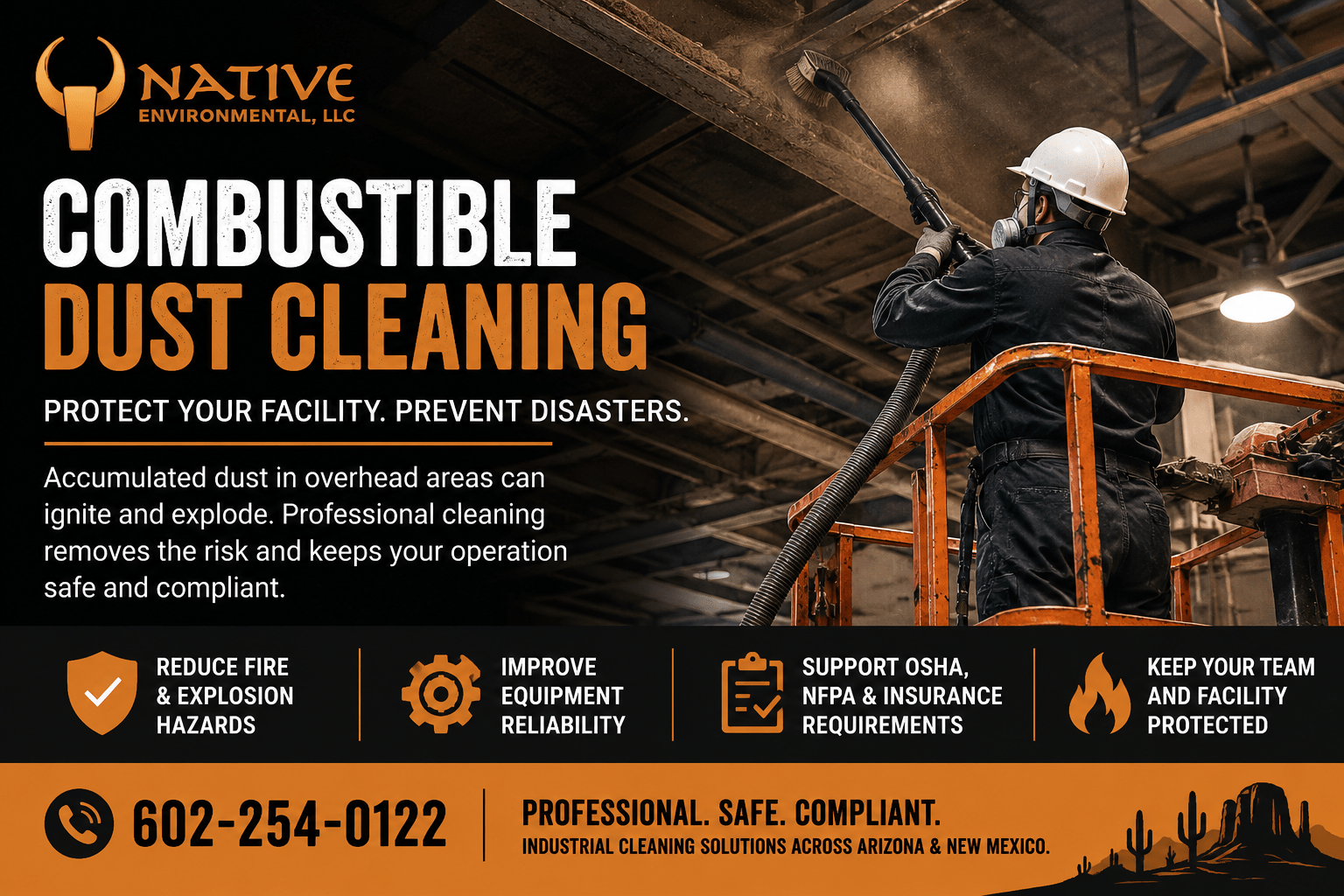
Combustible Dust Cleaning: When Overhead Dust Becomes A Serious Hazard
Dust on a warehouse beam can look harmless because it is far away from the production floor. In some facilities, however, that layer is made from fine wood, food, plastic, paper, coal, textile, or metal particles that can burn. Once those particles become suspended in the air and meet an ignition source, a routine housekeeping problem can become a fire or explosion hazard.
That is why combustible dust cleaning is not the same as ordinary janitorial work. The material, the process that creates it, the surfaces where it settles, and the equipment used to remove it all need to be considered before cleaning begins.
Look Above The Areas Employees Clean Every Day
Floors and workstations usually receive the most attention. Dust also settles on roof supports, pipes, ducts, cable trays, lighting, equipment tops, and narrow ledges. These elevated areas are easy to overlook, especially when the facility remains busy and access requires lifts or other equipment.
A small amount across one beam may not seem important. The concern grows when similar deposits cover a large part of the building. Vibration, an equipment failure, or a burst of air can disturb the material and produce a dust cloud. A fire elsewhere in the facility may then provide the ignition source.
Facility managers should include overhead and concealed surfaces in routine inspections rather than waiting until the accumulation is obvious from the floor.
Find Out Whether The Dust Can Burn
Not every industrial dust presents the same hazard. The answer depends on the material and its properties, not simply its color or thickness. Facilities that grind, cut, sand, mix, convey, package, or process combustible material should know what dust their operations generate.
The facility dust hazard analysis, safety data, process information, and applicable standards should guide that decision. If the material has not been evaluated, guessing is a poor substitute. A cleaning contractor also needs accurate information before selecting equipment and planning the work.
This matters particularly with metal dust and other materials that may require specialized collection methods. An ordinary shop vacuum should not be assumed suitable for every dusty industrial area.
Avoid Cleaning Methods That Spread The Problem
Dry sweeping and uncontrolled compressed air can lift settled dust into the atmosphere. That may increase worker exposure and create the kind of suspended cloud the cleaning was supposed to prevent.
Safe removal normally begins with a written plan. The plan should identify the material, affected areas, access method, production status, ignition controls, collection equipment, personal protection, and disposal route. Work may need to be divided into zones so one crew does not disturb dust above occupied production areas.
The equipment must fit the hazard classification and the material being collected. Cleaning should also be coordinated with the facility safety team rather than treated as an isolated maintenance task.
Set A Frequency Based On Actual Accumulation
There is no useful universal answer such as once a year or once each quarter. A bakery, wood shop, metal processing plant, and distribution warehouse can have completely different dust patterns.
Inspection records provide a better schedule. Note where dust returns first, how quickly it builds, and which operating conditions make the problem worse. Production changes, damaged collection equipment, new materials, or altered ventilation can all shorten the time between cleanings.
Regular cleaning does not replace source control. Dust collection systems, enclosed transfer points, equipment maintenance, and good operating practices should reduce the amount escaping into the building. Professional cleaning deals with material that those controls do not capture.
Arrange Combustible Dust Cleaning In Arizona
Native Environmental provides industrial and overhead cleaning for warehouses, production plants, processing facilities, and other demanding work sites throughout Arizona and New Mexico. The team can assess difficult access areas, develop a practical cleaning plan, and staff large projects efficiently. Call Native Environmental at 602-254-0122 to discuss combustible dust cleaning before overhead accumulation becomes a larger safety and maintenance problem.
Live References
Native Environmental: Industrial Cleaning Services
https://nativeaz.com/industrial-cleaning.htm
Occupational Safety and Health Administration: Combustible Dust Standards
https://www.osha.gov/combustible-dust/standards
Occupational Safety and Health Administration: Protecting Workers From Combustible Dust Hazards
https://www.osha.gov/sites/default/files/publications/OSHA3878.pdf
National Fire Protection Association: NFPA 660 Standard Development
https://www.nfpa.org/codes-and-standards/nfpa-660-standard-development/660