
What To Do After A Mercury Spill At Work
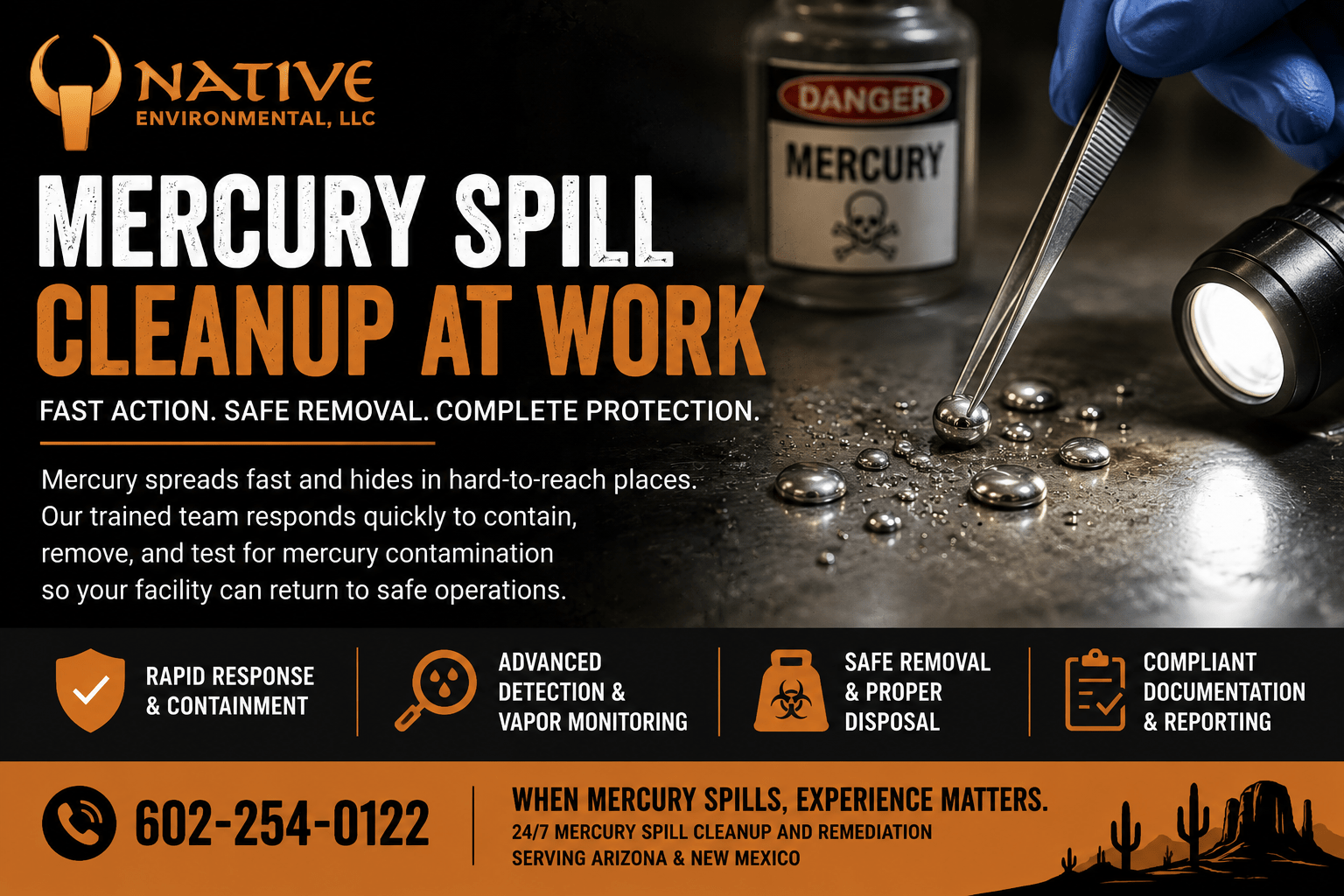
A mercury spill in a laboratory, warehouse, school, healthcare building, or production area can be easy to underestimate. Liquid mercury separates into small silver beads that travel across hard floors, enter cracks, cling to footwear, and reach places that are difficult to inspect. The visible material may be only part of the contamination.
The first few minutes matter. A rushed response with a broom or ordinary vacuum can spread mercury through the area and make professional cleanup more difficult.
Keep People Away From The Spill
Stop foot traffic and prevent employees, visitors, or students from walking through the affected space. Anyone who may have stepped in the mercury should remain nearby but outside the immediate spill area until footwear and possible tracking can be assessed.
For a large spill, an unknown quantity, or any situation involving illness or immediate danger, contact emergency services and the appropriate authorities.
Do not carry contaminated objects through the building. Mercury can move into corridors, vehicles, offices, and homes on shoes or equipment.
Do Not Use A Broom Or Regular Vacuum
The United States Environmental Protection Agency warns against using a broom or vacuum cleaner on spilled mercury. A broom can divide the liquid into smaller beads and scatter them farther. A conventional vacuum can increase mercury in the air and contaminate the machine itself.
Mercury should never be poured into a drain. It may remain in plumbing and create another exposure problem later. Avoid touching the beads with bare hands or attempting to wipe them up with a cloth.
Opening exterior windows may help in some circumstances, but ventilation decisions in a commercial building should account for the heating, cooling, and air distribution system. The priority is to avoid moving contamination into unaffected areas.
Know When The Spill Needs Professional Cleanup
A tiny amount on a smooth, contained surface is different from mercury released across porous flooring, machinery, drains, expansion joints, or a busy work area. Commercial cleanup becomes particularly important when the amount is uncertain, the material has been tracked, or the spill entered cracks that cannot be checked visually.
Carpet, fabric, unfinished wood, and other porous materials may hold contamination. Warm conditions can also increase mercury vapor. A space should not be declared safe simply because no silver beads remain visible.
Facilities may also have mercury in switches, gauges, lamps, instruments, older laboratory equipment, and industrial processes. The source should be identified so managers know the likely quantity and whether additional devices present the same risk.
Professional Response Goes Beyond Picking Up Beads
A qualified remediation team can define the affected area, use suitable recovery methods, collect contaminated debris, and monitor mercury vapor with specialized instruments. The work plan may include removing materials that cannot be cleaned adequately and packaging waste for proper transport and disposal.
Monitoring is important because it checks conditions that cannot be judged by sight or smell. Results can help determine whether additional work is necessary and when the area can return to normal use.
The incident should also be documented. Record the source, estimated quantity, location, people present, immediate actions, cleanup work, monitoring results, and waste records.
Prevent The Next Mercury Release
Once the emergency has passed, review how mercury containing equipment is stored and handled. Use protective trays where appropriate, keep spill procedures current, train relevant employees, and consider replacing older mercury devices when practical.
A response plan should identify who makes decisions, who contacts outside help, and how nearby areas will be isolated. That preparation saves valuable time during an actual release.
Request Mercury Spill Cleanup In Arizona
Native Environmental provides mercury spill assessment, cleanup, remediation, and vapor monitoring for industrial facilities, production floors, warehouses, assembly areas, and other commercial properties. Call 602-254-0122 as soon as a spill is discovered so the affected area can be evaluated and the cleanup planned without spreading mercury through the facility.
Live References
Native Environmental: Mercury Spill Cleanup Services
https://nativeaz.com/mercury-spill-cleanup-phoenix.htm
United States Environmental Protection Agency: Responding To A Larger Mercury Spill
https://www.epa.gov/mercury/what-do-if-you-spill-more-mercury-amount-thermometer
United States Environmental Protection Agency: What To Do If A Mercury Thermometer Breaks
https://www.epa.gov/mercury/what-do-if-mercury-thermometer-breaks
United States Environmental Protection Agency: Mercury Cleanup Case Studies At Schools
https://www.epa.gov/schools/case-studies-about-mercury-cleanups-schools